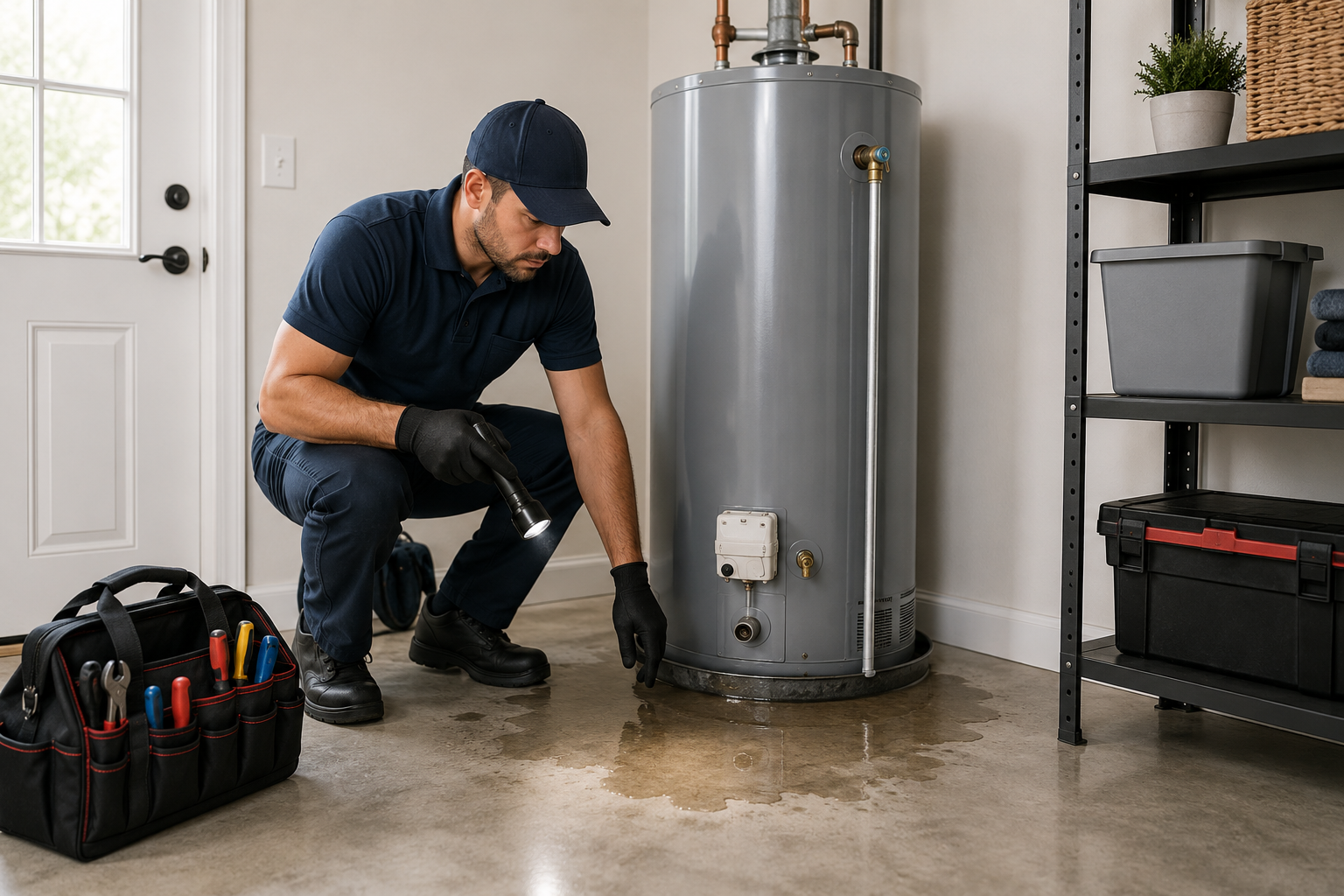
A leaking water heater can cause water damage, mold growth, higher utility bills, and unexpected system failure. Our leak detection specialists locate the source of water heater leaks quickly and accurately before costly damage occurs.
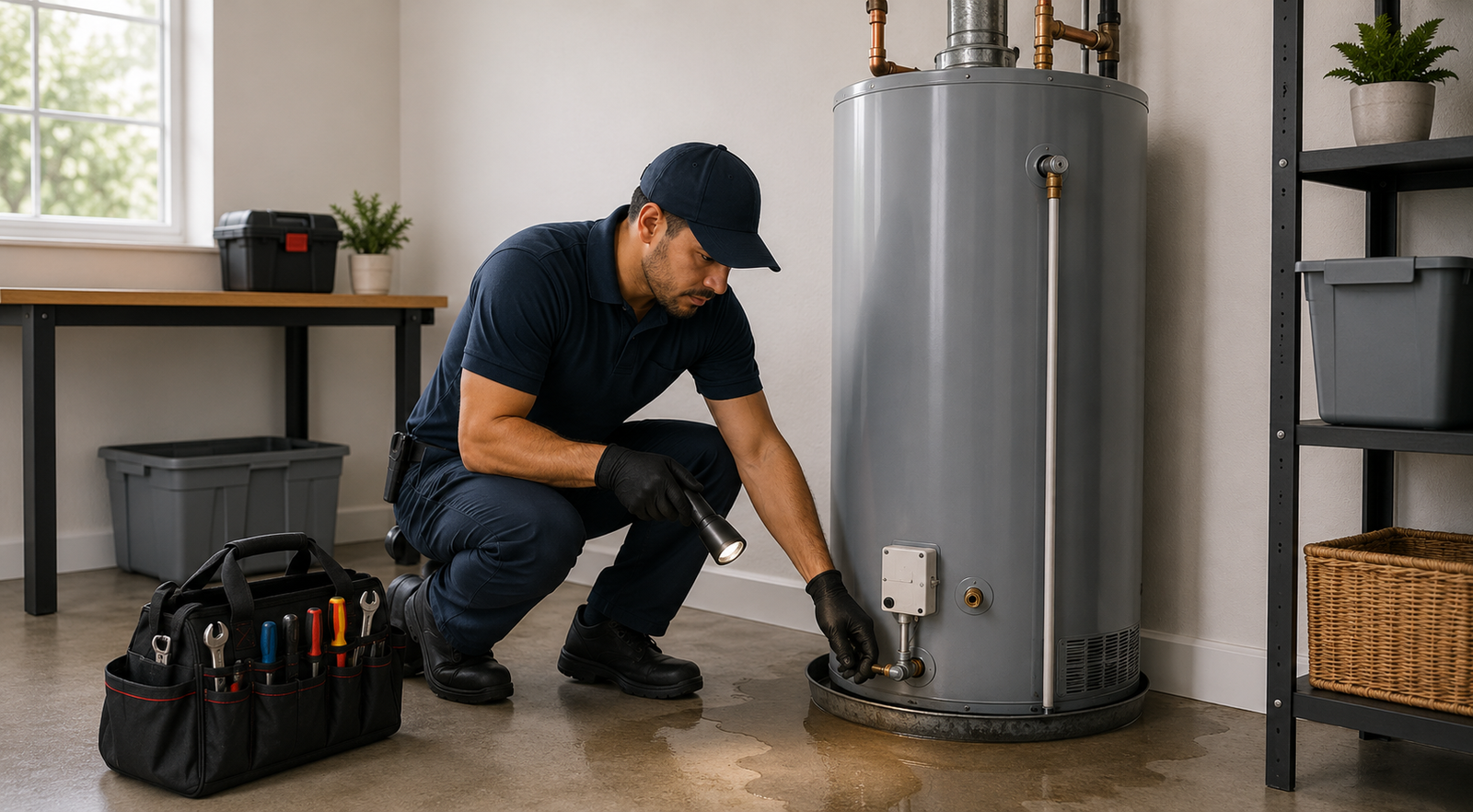
Water heater leaks often start small but can quickly lead to water damage, mold growth, and costly repairs. If you notice any of the following warning signs, it may be time to schedule a professional inspection.
Pooling water near your water heater may indicate a leaking tank, valve, or connection.
Visible rust, corrosion, or mineral buildup can be a sign of water heater deterioration.
Loose fittings, valves, and supply line connections may allow water to escape.
A hidden water heater leak can waste water and increase monthly utility costs.
Moisture around the water heater area may indicate an active leak.
Leaks can affect system performance and reduce the amount of available hot water.
Popping, rumbling, or unusual sounds may indicate sediment buildup or internal water heater issues.
Water heater leaks can originate from several components within the system. Our leak detection process helps identify the exact source of the problem so appropriate repairs can be made.
Leaks caused by internal tank corrosion, rust, or deterioration of the water heater tank.
Water escaping from the temperature and pressure relief valve due to excess pressure or valve issues.
Leaks developing around the drain valve located near the bottom of the water heater.
Leaks affecting the cold water supply connection entering the water heater.
Leaks occurring where heated water exits the system and enters household plumbing.
Leaks involving expansion tanks designed to manage changes in water pressure.
Leaks in water supply lines, fittings, and plumbing connections attached to the unit.
Moisture problems caused by concealed plumbing leaks located behind nearby walls and surfaces.
Homes in Corpus Christi face environmental and plumbing conditions that can contribute to water heater leaks over time. Coastal air, aging plumbing systems, and water quality factors can all affect the performance and lifespan of water heaters.
High humidity levels can contribute to moisture-related issues and accelerate wear on plumbing components.
The coastal environment may speed up corrosion on metal fittings, valves, and water heater components.
Older plumbing connections and water heater installations are more susceptible to leaks and deterioration.
Mineral deposits can accumulate inside water heaters, affecting efficiency and increasing stress on system components.
As water heaters age, internal components may wear out, increasing the risk of leaks and system failures.
Hard water can contribute to sediment buildup, reduced efficiency, and premature wear on water heater parts.
Water heater leaks can be difficult to diagnose without the right equipment and experience. Our team helps homeowners identify the source of leaks quickly and accurately while minimizing disruption to their property.
No unnecessary damage to walls, flooring, or surrounding areas.
Address water heater leaks before they lead to major water damage.
Know exactly where the leak is coming from before repairs begin.
Experienced in diagnosing water heater and plumbing-related leaks in homes.
Understand the problem and available repair options with confidence.
Practical solutions based on the condition of your water heater and plumbing system.
The Flow Experts — trusted residential leak detection in Corpus Christi, TX. We find hidden leaks fast and accurately, without unnecessary digging. Contact us today to protect your home.
Sign up our newsletter to get update information, news and free insight.